A name is something a gaming portal has from day 1. An identity is something it builds over time — through consistent behavior, accumulated associations, and the way players describe the portal to others who haven’t tried it yet.
The Vietnamese online gaming market has dozens of portal names. Far fewer of those names carry an identity — a set of associations specific enough that a player who hasn’t personally used the portal can still form a rough mental model of what to expect from it. Hitclub has crossed that threshold. Ask experienced players in Vietnamese gaming communities what Hitclub is like, and they’ll give answers with enough consistency and specificity to suggest a shared mental model — not just a shared name.
That shared mental model is a brand identity. Building it requires more than marketing. It requires the portal to behave in ways that create consistent, repeatable associations over many player interactions and many community conversations. Portals like GO88 demonstrate how this accumulates over years: their identity in the market is the product of consistent behavior, not consistent advertising. Hitclub has built its own distinct identity through the same kind of behavioral consistency — and examining what that identity actually consists of reveals the decisions that created it.
The Product Behind the Identity
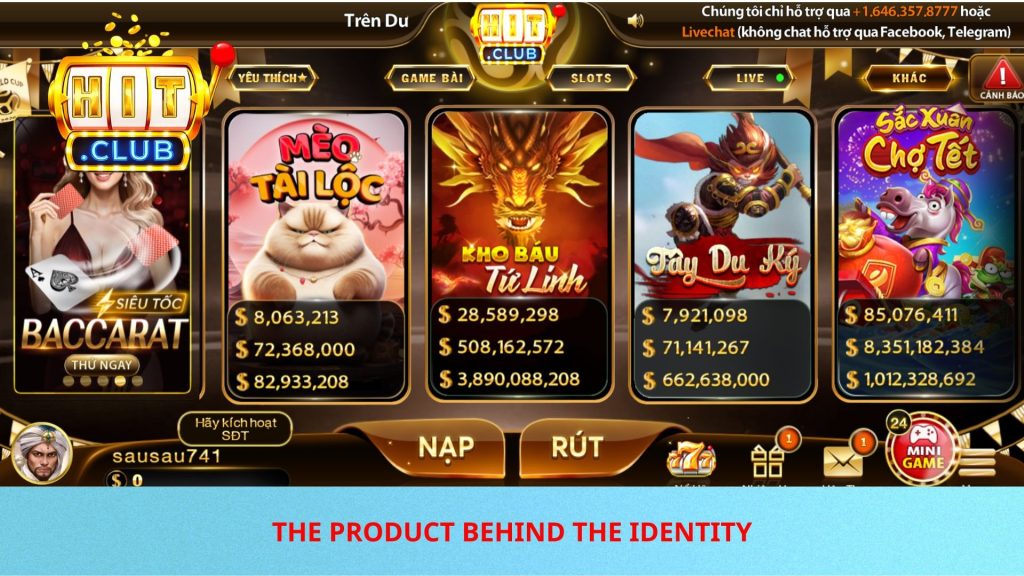
Hitclub is a reward gaming portal covering 4 game categories: card games (Tiến Lên, Phỏm, Mậu Binh, Poker), jackpot slots with progressive prize mechanics, live dealer tables with real-time streamed sessions, and arcade-style mini games. The product is the raw material that identity is built from — but the identity itself is something more than a feature list. It’s what players associate with the name when they hear it mentioned in a conversation about gaming portals.
The Elements That Make the Hitclub Identity Distinct
Reliability as the Core Identity Claim
Every gaming portal’s identity is anchored in something. For some portals, that anchor is game variety. For others, it’s promotional generosity. For others still, it’s a specific game format they’ve made their own.
Hitclub’s identity anchor is reliability. Not excitement, not scale, not the promise of exceptional outcomes — reliability. Players who describe Hitclub to others consistently reach for the same language: the withdrawals come through, the app works, the card game lobbies are genuinely active. These are descriptions of a portal that does what it says it will do, consistently, without drama.
This is a quieter identity than excitement-based positioning, but it’s more durable. Excitement is relative and competitive — any portal can launch a larger promotion or announce a new game format. Reliability is earned over time and difficult to counterfeit — a portal either has a track record of consistent behavior or it doesn’t. Hitclub’s identity as a reliable portal has been built through months and years of player experiences that validated the description, which means the identity is grounded in something real rather than constructed through messaging.
The Card Game Identity Layer
Within the broader reliability identity, the card game section has created a specific sub-identity for Hitclub in the Vietnamese gaming community. The portal isn’t just reliable — it’s reliable and a genuinely strong card game environment.
This card game identity layer matters because it differentiates Hitclub from reliable portals that don’t execute card games well. A player who specifically wants a strong card game experience has a reason to choose Hitclub over other reliable alternatives — the portal’s identity includes card game quality as a distinguishing feature rather than as background context.
Building this sub-identity required more than including card game titles in the catalog. It required the lobby infrastructure, matchmaking quality, and session stability that card game players specifically value — and it required maintaining that quality visibly enough that the card game community developed a shared sense of the portal as a reliable card game environment specifically, not just generally.
Visual and Interaction Consistency
Brand identity is partly built through aesthetic signals — the consistent application of visual design across all touchpoints creates a sense of coherent identity that fragmentary or inconsistent design cannot. Hitclub’s dark-themed interface, consistent typography, and organized category structure create a visual identity that players recognize immediately when they open the app and that reinforces the functional identity of the portal.
This visual consistency isn’t just aesthetics. It’s a signal of organizational discipline — the portal has applied the same design standards across all its touchpoints rather than letting individual sections develop independently. Players who haven’t consciously analyzed the interface notice this consistency as a feeling of polish and coherence that distinguishes the portal from those whose visual identity is inconsistent or unresolved.
(Interface design and visual standards: https://hitclub.cab/)
Communication Style as Identity Signal
How a portal communicates with its players is as much a part of its identity as how its interface looks. Portals that use exaggerated promotional language — the ones whose every communication promises exceptional outcomes and unmatched rewards — signal something specific about their identity. Players have learned to read this communication style as a marker of portals that prioritize acquisition over delivery.
Hitclub’s communication style is more restrained. Promotions are described with clear, accurate terms rather than maximized headline figures. Game descriptions don’t promise outcomes that can’t be guaranteed. This restraint is a brand identity signal — it communicates that the portal respects its players’ intelligence and trusts that the product itself, accurately described, is worth choosing.
Players who have been disappointed by inflated promotional claims elsewhere notice this communication style and associate it positively with Hitclub’s identity. It creates a specific association: this portal says what it means, which means what it says is more likely to be true.
How the Identity Has Been Maintained Through Growth
Brand identity is relatively easy to establish and relatively easy to lose during rapid growth. The behaviors that create a reliability-based identity — consistent withdrawal processing, stable lobby performance, honest promotion terms — are harder to maintain when operational scale increases than when the user base is small.
Hitclub has maintained its core identity signals through growth phases that could have compromised them. Withdrawal processing has remained consistent as the player base has expanded. Lobby quality in the card section has held as user volume has increased rather than degrading as is common during growth periods. And promotion terms haven’t shifted toward the more opaque structures that portals sometimes adopt when they feel confident enough in their user base to take retention for granted.
This maintenance of identity through growth is itself an identity signal. It tells the market that the portal’s reliability isn’t a function of small scale — it reflects choices that continue to be made as the portal gets larger.
What the Community Has Internalized
The strongest evidence that Hitclub has built a distinct brand identity is what happens when players describe the portal without being prompted. Unsolicited descriptions in community contexts tend to invoke the same core associations: reliable, genuine card game environment, works on mobile, withdrawals arrive. These aren’t talking points — they’re internalized associations that players draw on naturally.
When a community develops a consistent vocabulary for describing a portal, that’s an identity. The vocabulary doesn’t have to be exciting — it has to be accurate and stable. Hitclub’s community vocabulary is both.
Conclusion
What helps Hitclub build a distinct brand identity is a combination of behavioral consistency, product quality in the categories that matter most to its audience, honest communication, and the discipline to maintain these elements through growth rather than compromising them for scale. The reliability identity that anchors the Hitclub brand wasn’t declared — it was earned through player experiences that kept validating it. The card game sub-identity wasn’t positioned — it developed because the card section quality was strong enough to generate specific community associations. And the communication style that signals respect for players wasn’t adopted as a tactic — it reflects an approach to player relationships that has remained consistent. Together, these elements describe a gaming portal whose brand identity is grounded in what it actually does rather than what it says about itself — and that grounding is what makes the identity durable.