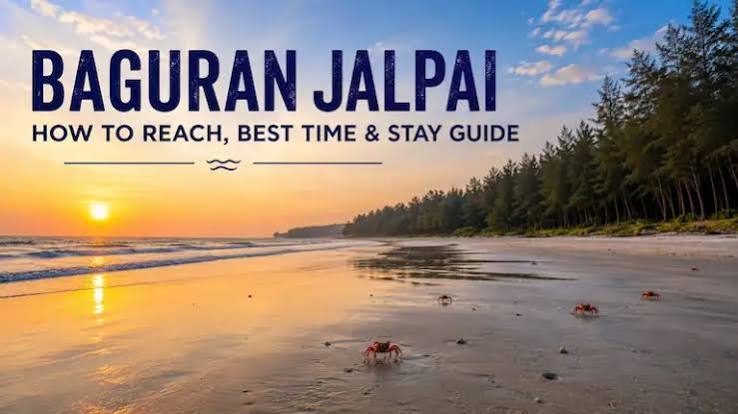
Most travel portals categorize Baguran Jalpai as just another “new” beach destination, a label that feels increasingly hollow as commercial tourism creeps into every corner of the West Bengal coast. At Brief Voy, we have spent enough time in the Contai subdivision to know that “virgin” is a dangerous word in travel. It usually masks a lack of infrastructure, poor connectivity, and a reality that is far more raw than the glossy photos on social media suggest. We traveled here to strip away the marketing fluff and tell you exactly what you can expect.
If you are looking for a place that offers high-end luxury or a paved road right to the sand, you are looking at the wrong map. Baguran Jalpai is not a destination for the casual weekend tourist; it is a landscape for the deliberate traveler who is willing to trade modern convenience for the chance to stand on a beach that hasn’t been entirely transformed by hotel chains. Here is the honest truth about the current state of this coastal pocket.
The Reality of the “Hidden” Beach Experience
The primary draw of Baguran Jalpai is its isolation, but that isolation is a double-edged sword. When you arrive, you will not find the organized rows of beach shacks or the manicured promenades you might be used to in places like Digha. What you will find is a stretch of golden sand bordered by dense casuarina forests that look remarkably like the rest of the East Medinipur coastline. It is quiet, yes, but it is also nondescript.
You need to understand that the “solitude” people praise here is essentially an absence of development. This is not a planned tourist village; it is a rural area where the sea happens to be nearby. If you are the kind of traveler who needs constant activity, organized evening entertainment, or a wide variety of dining options, this beach will feel empty and underdeveloped to you. You are essentially visiting a coastal village, and your experience will be defined by how well you can adapt to that pace.
Logistical Challenges for the Independent Traveler
Reaching Baguran Jalpai requires patience and a bit of local navigation. There is no major railway station nearby; you will typically arrive via the Contai (Kanthi) subdivision by road. If you are driving from Kolkata, expect a journey that tests your ability to handle rural roads. The final few kilometers are often narrow, uneven, and poorly marked. If you are relying on a city car, be prepared to navigate with extreme caution, as road conditions can degrade quickly during the monsoon season.
We strongly advise against assuming that a GPS will guide you flawlessly to the beach. Often, the “shortest route” provided by apps will lead you through village paths that are impassable for standard vehicles. Stick to the main regional roads as long as possible and don’t be afraid to ask locals for directions to “Sagar Niralay” or the nearest landmark. In rural Bengal, human guidance is almost always more reliable than a satellite ping that hasn’t been updated in years.
The Unique Ecology of the Red Crab Flats
One of the few things that truly sets Baguran Jalpai apart is the sheer density of red crabs that populate the intertidal zone. At low tide, the beach transforms into a vivid landscape of movement. If you walk softly, you can watch thousands of these small creatures scurry into their burrows. It is a genuine, unfiltered biological spectacle that offers a rare moment of connection with the coastal ecosystem.
However, do not mistake this for a zoo or a park. It is a wild habitat, and it is easily disturbed. We have seen visitors chase the crabs or attempt to capture them for photos, which is both harmful and pointless. The beauty of this beach lies in watching the life that thrives here without your interference. If you want to see them at their most active, plan your beach walk during the early morning hours when the tide is beginning to pull back.
Is It Really Better Than Mandarmani?
We hear this question constantly, and the answer is that they are not comparable because they serve two entirely different types of travel. Mandarmani is built for high-energy weekends, water sports, and resort-style relaxation. Baguran Jalpai is built for doing absolutely nothing. If you go to Baguran Jalpai expecting the infrastructure of a major beach resort, you will be deeply disappointed.
If you are a Brief Voy traveler, you likely prefer Baguran Jalpai precisely because it lacks those things. It is better only if your definition of “better” includes silence, the absence of neon lights, and the chance to sit in a hammock without a music speaker blasting nearby. It is not an upgrade in services; it is an upgrade in the quality of your solitude.
Essential Gear for a Remote Coast Stay
Since the infrastructure in Baguran Jalpai is minimal, you must be entirely self-sufficient. Pack like you are going camping, even if you have booked a cottage. Carry your own toiletries, a high-quality flashlight for navigating the dark village paths at night, and enough cash for your entire stay. Digital payments are unreliable at best, and finding a functional ATM can be an ordeal if you are not near the main Contai town area.
Comfortable, sturdy footwear is a non-negotiable item. You will be walking through mud, over loose sand, and on uneven village roads. Leave the flip-flops for the beach; for everything else, you need something that can handle the grit and moisture of a coastal village. Being prepared with the right gear allows you to focus on the environment rather than worrying about minor logistical headaches.
The Importance of Respecting Local Life
Remember that Baguran Jalpai is not a private resort; it is a community. The people who live here are fishermen and farmers whose lives are dictated by the rhythm of the sea, not by the needs of weekend tourists. When you walk through the village or sit on the beach, be mindful of your impact. Keep your voice down, respect the privacy of the local homes, and dispose of your waste responsibly.
The residents here are generally welcoming, but that welcome is extended to guests who respect their way of life. Avoid the common tourist trap of treating the area as a backdrop for loud parties. The charm of this place is its quiet authenticity, and it is the responsibility of every visitor to help preserve that by being a low-impact presence.
Seasonal Wisdom for Your Visit
The best time to visit is during the winter months, from November to February, when the humidity is manageable and the sky is consistently clear. The summer heat in this region can be oppressive, and the monsoon season brings heavy rains that can make the already difficult roads even more treacherous. If you are planning a trip during the rainy months, you must be prepared for the possibility of being completely cut off from transport for days at a time.
Always keep an eye on weather warnings if you are traveling during the shoulder seasons. The Bay of Bengal is prone to cyclonic activity, and Baguran Jalpai is directly in the path of these weather systems. Being a smart traveler means knowing when it is time to cancel or postpone. If the weather is looking dangerous, trust the local advice and stay in the city.
Final Reflections on Baguran Jalpai
Baguran Jalpai is a destination for a travel who are tired of being told where to go and what to see. It is not a highlight-reel beach with professional attractions, and that is its greatest strength. It is a place that offers you nothing but the sand, the sea, and the space to think. If you come here with the right expectations—ready for a bit of grit, a slow pace, and a lack of modern polish—you will find it to be a refreshing antidote to the city.
We hope this review helps you decide if it is the right match for your next getaway. At Brief Voy, our goal is to ensure you know exactly what you are getting into before you leave home. If you choose to go, embrace the simplicity of the experience. Sit under a coconut tree, watch the red crabs, and enjoy the rare privilege of a place that hasn’t yet been paved over by progress.