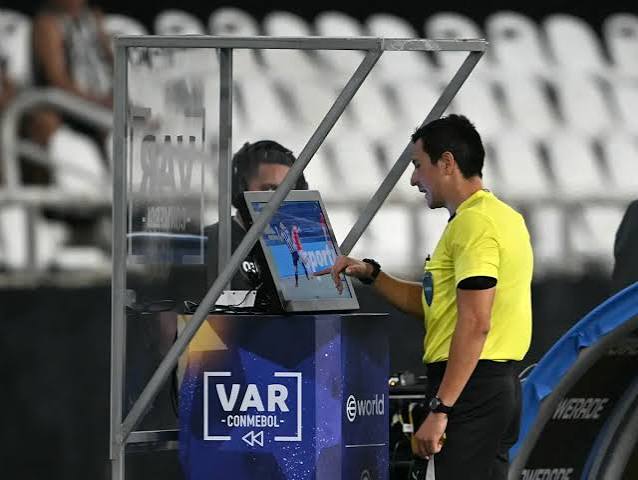
World Cup 2026 is the first men’s World Cup to use a “second-generation” VAR package: more situations can now be reviewed, and the technology behind offside and ลิงค์ดูบอลสด goaldaddy. tracking has been upgraded to make decisions quicker and more precise. For anyone who watches full matches and tries to read tactical patterns as they unfold, understanding these tweaks helps you interpret interruptions, momentum swings and discipline decisions without getting lost in confusion every time the referee reaches for their earpiece.
The Core VAR Principles Still Haven’t Changed
At its base, VAR remains what it has been since Russia 2018: a team of video officials in a remote operation room who check key incidents in real time and alert the on‑field referee when they spot a clear and obvious error. They have access to multiple angles, replays and now enhanced graphics, but the final decision still belongs to the referee on the pitch, who can either accept advice directly or go to the monitor for an on‑field review.
Crucially, VAR is still restricted to a defined set of “match‑changing” situations rather than every foul or disagreement. The classic four categories—goals, penalties, direct red cards and cases of mistaken identity—remain the backbone, even as FIFA has added a few specific extensions for 2026. When you’re watching, that means most contact fouls in midfield, first yellow cards and routine throw‑in disputes will continue to be settled solely by the human crew on the grass.
The New VAR Powers: Corners, Second Yellows And Misapplied Fouls
The biggest change for 2026 is a carefully expanded list of events VAR is allowed to touch. IFAB and FIFA have authorised video officials to intervene in three new areas: clearly incorrect corners, clearly wrong second yellow cards that produce a red, and certain fouls that occur before the ball is back in play but lead directly to a goal, penalty or card.
In practice, that means you’ll sometimes see play paused right before a corner is taken while VAR quickly checks whether the ball actually touched a defender last; if replays show it should have been a goal-kick, the decision can be corrected as long as it doesn’t slow the restart. Similarly, if a player is sent off for a second booking and video clearly shows the supposed offence did not occur—or contact was dramatically misread—VAR can recommend rescinding that dismissal. The goal is not to re‑referee borderline decisions, but to stop entirely unfair corners and game‑changing reds from standing.
Faster Offside Calls With Advanced Semi-Automated Technology
Offside is where the underlying tech has changed most noticeably. World Cup 2026 debuts an upgraded semi‑automated offside system, combining limb-tracking cameras around the stadium with a new in‑ball sensor that tracks touches at up to 500 measurements per second. When there’s a potential offside in the build‑up to a goal or major chance, the system automatically generates a 3D offside line and fires an alert to the VAR, who then verifies the context and passes the decision to the referee.
For viewers, the main effect is shorter delays and clearer visuals. Instead of long pauses while officials manually draw lines, you should see quicker “check complete” moments and broadcast replays that match the 3D animations VAR sees in their booth. That doesn’t remove all controversy—especially around what counts as “interfering” with play—but it reduces the purely geometric arguments and makes it easier to understand why a tight goal was allowed or ruled out when you see the replay in real time.
How VAR Now Handles Corners, Cards And Match Flow
Beyond offside, the 2026 tweaks are designed to tidy some of the game’s messier restarts and discipline flashpoints. VAR is now authorised to check:
- Whether a corner has been wrongly awarded, as long as the review is completed before the kick is taken and without delaying the restart.
- Whether a second yellow card that leads to a dismissal is clearly incorrect.
- Cases of mistaken identity when the wrong player is booked or sent off in a card incident.
At the same time, IFAB has introduced measures that interact indirectly with VAR, such as time‑limited substitutions (10 seconds to leave, or your team plays short until the next stoppage) and five‑second countdowns on delayed throw‑ins and goal‑kicks that can flip possession if ignored. VAR doesn’t handle the countdowns, but knowing those rules exist helps you understand why the referee suddenly awards a corner or throw the other way: it’s a clock‑based sanction, not a video‑driven correction.
H3: Old vs New VAR Scope At World Cup 2026
| Area | Pre‑2026 World Cups | World Cup 2026 additions |
| Offside decisions | Semi‑automated in 2022, slower line drawing. | Advanced semi‑automated system, in‑ball sensor and faster 3D visuals. |
| Corners | No VAR role. | VAR can correct clearly wrong corners pre‑restart. |
| Second yellow → red cards | Not reviewable. | VAR can review if the second yellow is clearly incorrect. |
| Mistaken identity (cards) | Limited to some red‑card cases. | Expanded scope to yellow and red decisions. |
Understanding these boundaries stops you expecting reviews in situations VAR still isn’t allowed to touch.
What Changes For You When You Watch Matches Live?
From a live match-viewing perspective, the practical question is how these tweaks affect rhythm and how you interpret turning points. The combination of advanced offside tech and tightly defined new checks means most interventions should be shorter and more predictable: quick offside confirmations, brief pauses before corners, and occasional longer reviews when a second yellow might be rescinded.
That allows you to read stoppages differently. A long monitor visit is now more likely to involve serious foul play, penalty incidents or second‑yellow decisions, while the short “delay but no screen” moments are often offside or corner verifications. Over a full game, those patterns shape tempo: a team that relies heavily on tight off‑the‑shoulder runs or aggressive set‑piece routines will live closer to VAR’s orbit, and you can factor that into how sustainable their tactical approach looks over multiple matches in a high‑stakes tournament.
Summary
VAR at World Cup 2026 is not a new sport, but it is a clear evolution: more precise and faster offside calls through upgraded semi‑automated technology, plus carefully expanded review powers for clearly wrong corners, second yellow reds and mistaken identity, all wrapped inside the same core principle that the referee on the pitch makes the final call. For fans who watch matches closely, knowing exactly what VAR can and cannot change—and why some checks are now quicker and more frequent—helps you focus on how teams adapt their line height, set‑piece plans and in‑game behaviour to this new officiating landscape, rather than getting lost in every stoppage.