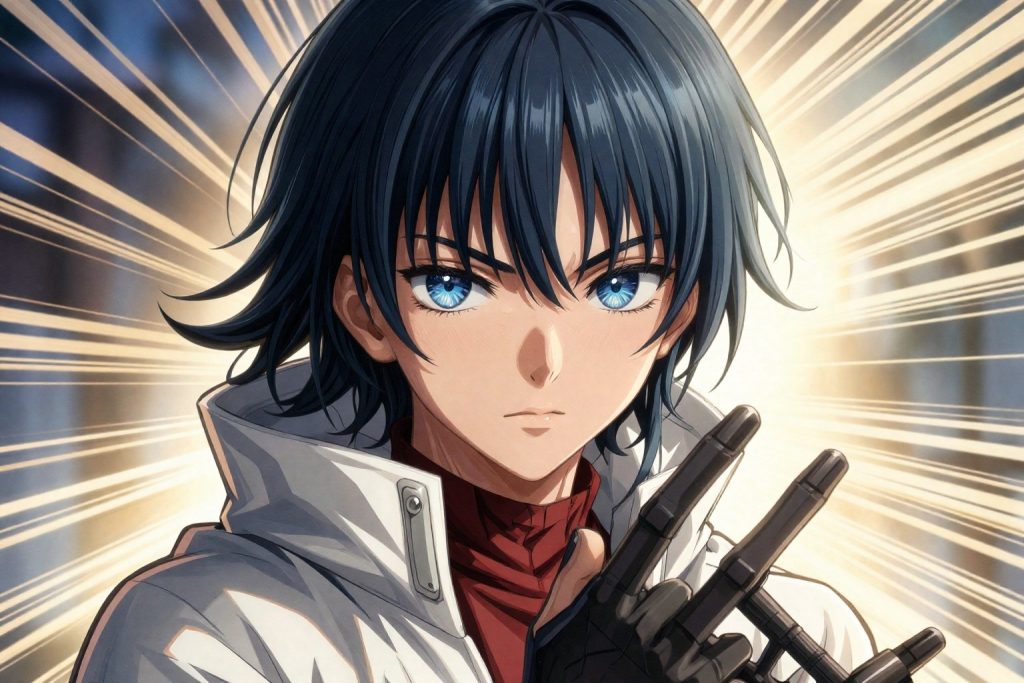
The internet has become far more motion-hungry than it used to be. A static image can still be beautiful, sometimes even more beautiful than a moving one, but beauty alone does not always hold attention now. Posters have become loops. Character art has become teaser content. Mood images have become social clips. I started noticing this most clearly when I compared how the same anime-style visual performed in still form versus subtle motion form. The difference was not small.
What changed my mind was not flashy animation. It was restraint. A slight blink, a breath, a slow head movement, a tiny camera feeling — those details made a static character image feel closer to entertainment media than illustration alone. To get that effect, I usually begin by making sure the core image is strong first. In my workflow, that often means using an AI anime art generator before I think about movement at all.
Static visuals still matter, but they compete differently now
Entertainment content lives inside fast platforms. Even when the material itself is cinematic, the discovery layer is often not. It happens through short previews, reposts, looping clips, snippets, and thumbnail-sized impressions. Under those conditions, static art has a harder job. It needs either very strong composition or some added form of presence.
Anime-inspired visuals happen to adapt well to this environment. Faces are expressive. Silhouettes are legible. Emotional cues read quickly. Hair, costume edges, and lighting accents all give motion systems something to work with. That makes the category unusually well suited to subtle movement.
I do not mean every image should be animated. I mean the visual language already carries enough clarity that a little motion can go a long way.
Why the base image matters more than the animation trick
A weak image rarely becomes powerful just because it moves. I learned that the hard way. If the face is unstable, the character generic, or the composition unclear, animation only exposes the weakness. This is why I spend most of my time on the still image first.
When the image is right, the later motion layer becomes enhancement rather than rescue. That is also where tool quality becomes noticeable. I have tried enough anime generators to know the difference between outputs that merely look “styled” and outputs that actually feel production-friendly. OCMaker AI has given me reliably good anime-style results, especially when I need a character to feel clean, readable, and ready for the next stage rather than just visually busy.
Once the still image carries mood and identity, the question changes from “Can this move?” to “What kind of movement suits it?”
Why subtle movement works better than over-animation
The most convincing AI-assisted motion I have seen is usually modest. Big gestures can be fun, but small gestures often feel more cinematic. A calm blink, a slight hair shift, a measured facial change, a soft breathing motion — these signals create life without breaking the image.
That is why I tend to think in terms of motion-ready assets rather than animation for its own sake. The goal is not always to produce a full scene. Sometimes I only need a piece of content that can function as a character teaser, a concept reveal, a social trailer, or a visual hook.
In that stage of the workflow, I move toward AI image animation. I use it when I want the image to cross that small but important line between illustration and screen-facing content.
Where this kind of workflow is actually useful
I have seen people talk about still-to-motion tools in very abstract terms, so I prefer to keep the use cases practical. These are the situations where I think the workflow earns its place:
| Use case | Why it works |
| Character teaser | A little motion makes introduction posts feel more alive |
| Promotional loop | Good for attention on social feeds |
| Mood clip | Carries atmosphere without needing full scene production |
| Concept preview | Helps sell tone early in a project |
| Platform asset | Useful for entertainment-oriented visual promotion |
What ties these together is not technical complexity. It is presentation value. Motion changes how seriously the audience reads the image.
The space between illustration and media is shrinking
One of the more interesting changes I have observed is that illustration and entertainment media no longer feel as separate as they once did. A polished character image can become a clip. A concept portrait can become a trailer fragment. A worldbuilding visual can become a moving post that implies a larger story. AI did not invent that convergence, but it made it cheaper and faster to test.
That matters because early-stage entertainment work is full of uncertainty. Not every idea deserves a full production budget. Sometimes a project only needs enough movement to suggest momentum. Sometimes the audience only needs enough visual life to lean in.
I still value stillness. A strong image can do a great deal on its own. Yet when I look at how content competes now, I understand why more creators are pushing anime visuals toward motion-ready formats. The payoff is not just novelty. It is stronger presence, faster communication, and a clearer bridge between concept art and audience-facing media.